



How Waterproof Fabrics Are Applied in Bag Manufacturing
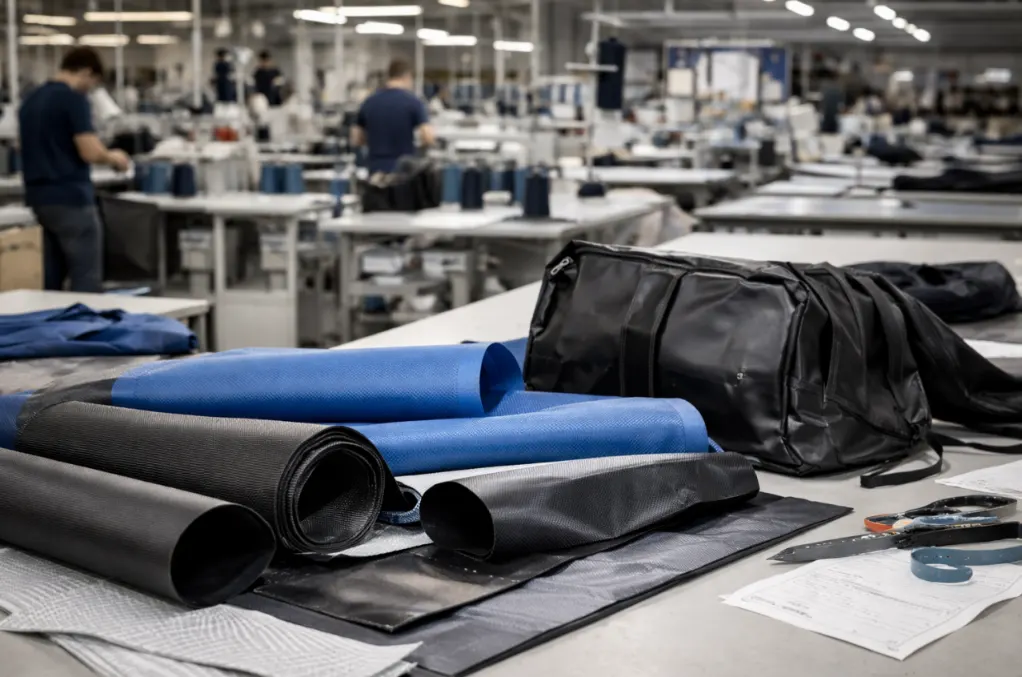
Brands often evaluate a waterproof fabric based on swatches and sample photos. The reality is that performance changes once manufacturing starts. That is why how waterproof fabrics are applied in bag manufacturing matters as much as which fabric you pick. The same roll can produce two very different outcomes depending on cutting, sewing behavior, seam handling, and how openings are built. In waterproof bag manufacturing, the goal is not “a waterproof fabric,” but repeatable performance across sampling, bulk runs, and reorders.
This guide focuses on what actually happens after the fabric arrives at the factory: how waterproof fabrics behave in production, where failures usually start, and how brands can reduce risk without turning a standard bag program into an over-engineered project.
From Fabric Roll to Finished Panel: What Changes in Production
A waterproof bag fabric does not stay “perfect” after it leaves the supplier. In production, it gets handled, cut, stacked, folded, stitched, and sometimes heated or pressed. Each step can stress coatings, laminations, and surface finishes. That is why fabric handling is a real performance variable, not an afterthought.
Common changes that happen early in the process include:
-
Creasing and fold memory that becomes visible on coated surfaces
-
Edge behavior that affects binding and seam finishing
-
Surface scuffing during stacking, bundling, and moving panels between stations
-
Dimensional stability shifts when fabrics relax after rolling or storage
For brands, the key is to define which surface changes are acceptable, and which are defects. A bag can still resist water while looking inconsistent on shelves. If appearance is part of your positioning, you need both performance targets and appearance standards tied to real production handling.
Coated vs Laminated Fabrics in Sewing Operations
Once panels move into stitching, waterproof materials start to reveal their trade-offs. Coated fabrics (often PU or TPU-coated) and laminated fabrics may look similar in a swatch book, but they behave differently in sewing operations.
How coated fabrics behave
Coated materials can be flexible and scalable, but they are sensitive to:
-
Needle heat and friction at higher sewing speeds
-
Surface marking from presser feet or guides
-
Crease whitening or cracking depending on coating thickness and formulation
A coated waterproof fabric for bags may perform well in rain, yet still show stress lines around folds, corners, and zipper areas after assembly. That becomes a brand problem when customers judge quality visually before they ever test water resistance.
How laminated fabrics behave
Laminated structures can offer a stronger barrier, but they often bring:
-
Stiffer panel behavior, which affects how seams sit and how clean corners look
-
Bonding sensitivity when panels are folded sharply or forced into shape
-
Higher visibility of alignment errors, because the fabric “holds” its form more rigidly
In practice, laminated fabrics reward strong process control and punish sloppy handling. If your program depends on consistent appearance and stable performance in bulk production, this is where factory discipline matters more than the marketing label on the fabric.
How Stitching, Binding, and Edge Finishing Affect Waterproof Performance
The most common misconception is that waterproof performance comes from the fabric alone. In reality, stitch lines and edges are the first places where water finds a path. Every needle hole is a potential leak point, which is why seam leakage risk is the central issue brands must address during development.
There are three manufacturing areas that routinely decide outcomes:
Stitching strategy
Stitch density, seam type, and thread choices influence both durability and leakage. High stitch density can increase strength, but it also increases the number of needle holes. A “strong-looking” seam can still leak faster than a simpler seam if it creates more perforation points.
Binding and edge finishing
Edge finishing is often treated as a cosmetic step, but it affects water pathways. Poorly controlled bindings can:
-
trap moisture near seams
-
create capillary paths that wick water inward
-
expose raw edges where coatings and laminations are most vulnerable
Corner construction
Corners compress fabric layers, concentrate stress, and increase needle penetration. This is where waterproof fabrics often show their worst behavior: creases, surface marks, and leakage at the same time. If you do not validate corner behavior during sampling, you will discover it later when bulk production magnifies minor issues into repeated defects.
Zippers, Openings, and Fabric Transitions
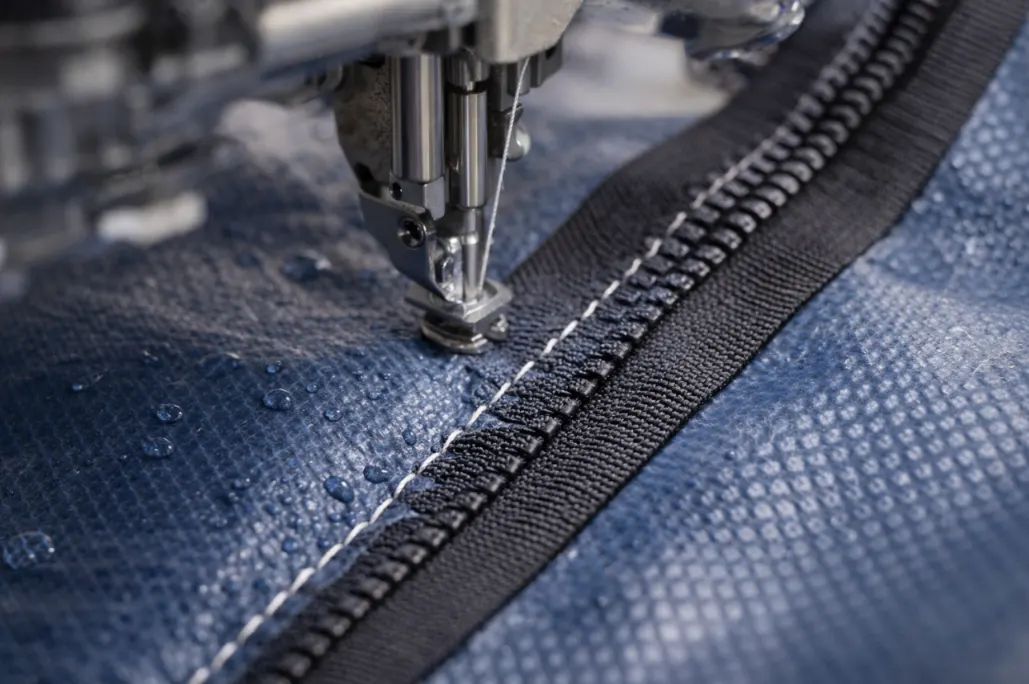
Even with excellent fabric and clean seams, openings can undermine performance. In most bag programs, the zipper zone is the first location to leak in real use. That is not always a material failure. It is a transition problem: fabric to zipper tape, zipper to lining, and zipper ends to seams.
Brands should treat openings as a system:
-
outer waterproof bag fabric controls surface wetting
-
zipper tape and construction define entry points
-
lining and internal structure decide whether moisture reaches contents
Fabric transitions are another underestimated risk. When you combine different materials—say a coated body with a different reinforcement, or a contrasting pocket fabric—you create zones with different stretch behavior and different needle response. Those mismatches can lead to puckering, seam distortion, and inconsistent appearance in bulk runs.
If your product line uses multiple fabric types, validate transitions early. Otherwise, you can end up with a bag that passes basic water tests but fails visual consistency standards, which is often the more immediate commercial risk.
Common Fabric-Related Failures Seen in Bulk Production
Sampling can hide problems because the sample room moves slowly and corrects issues by hand. In bulk production, time pressure and operator variability expose weaknesses fast. The most common failures linked to waterproof fabrics include:
-
Surface marking and scuffing that looks like “cheap coating” even if performance is fine
-
Crease damage at folds, corners, and pocket edges
-
Seam irregularity that increases leakage risk and visual inconsistency
-
Bonding or layer separation in laminated structures under stress
-
Batch-to-batch variation that changes hand feel, gloss level, or stiffness
These issues are not solved by asking for “better QC” at the end. They require earlier control: material specs, handling rules, sewing speed controls, and realistic validation of stress zones.
For brands, this is why production consistency should be treated as part of the product spec. If your factory cannot hold stable results at scale, the material choice becomes irrelevant.
How Brands Can Reduce Risk When Applying Waterproof Fabrics
In real programs, brands do not need to chase perfection. They need predictable outcomes. To reduce risk when applying waterproof fabrics in manufacturing, focus on four areas:
1) Define performance scope clearly
Agree on what “waterproof” means for the product: rain, splash, or stronger exposure. This prevents over-engineering and keeps development aligned with real use cases.
2) Lock material specs beyond the fabric name
“TPU-coated nylon” is not a complete spec. Lock the characteristics that affect production outcomes, such as surface finish expectations, stiffness range, and acceptable crease behavior. If you do not define these, you cannot enforce them during reorders.
3) Validate critical zones, not just flat panels
Test and review corners, seams, zipper ends, and transitions. Flat fabric performance tells you very little about how the finished bag will behave.
4) Build repeatability into sampling
Ask for validation that mirrors real production steps, not a hand-tuned prototype. If the sample only looks good because one technician “saved it,” it is not a production-ready result.
When these steps are in place, waterproof bag manufacturing becomes a controlled process instead of a guess. You reduce rework, improve repeat order stability, and avoid disputes that come from mismatched expectations.
Conclusion: Waterproof Fabrics Perform Only as Well as the Process Allows
A waterproof fabric is not a guarantee. Performance depends on how the fabric is cut, handled, stitched, and integrated with openings and transitions. That is why how waterproof fabrics are applied in bag manufacturing should be a core part of product planning for brand programs. When brands align material choices with real manufacturing behaviors—especially seam and zipper zones—they get products that perform consistently in bulk production, not just in a sample review.
Chic’s Approach to Manufacturing-Ready Waterproof Execution
Chic supports brand programs by treating waterproof fabrics as part of a production system. That includes aligning fabric selection with handling and sewing realities, validating high-risk zones like seams and openings during sampling, and tightening specifications to protect consistency across bulk runs and reorders. This approach helps brands reduce surprise defects, control appearance standards, and maintain stable waterproof performance as product lines scale.
FAQ
Q1: Do waterproof fabrics always require seam sealing to perform well?
A: Not always. Many products meet their intended rain or splash targets without sealing, but seams and openings still need controlled construction. The required level depends on your performance scope.
Q2: Why does a waterproof bag fabric look good in samples but inconsistent in bulk production?
A: Samples are slower and often corrected by hand. Bulk production increases handling, speed, and operator variability, which exposes surface marking, crease behavior, and seam consistency issues.
Q3: What is the biggest seam leakage risk in waterproof fabric for bags?
A: Stitch lines and zipper zones are the most common entry points. High stitch density, poor edge finishing, and weak zipper-end construction can all increase leakage risk.
Q4: Can coated and laminated waterproof fabrics be used on the same bag?
A: Yes, but transitions must be validated. Different materials stretch and stitch differently, which can create distortion, puckering, and inconsistent appearance if not controlled.
Q5: How can brands improve production consistency with waterproof materials?
A: Define performance scope, lock specs beyond the fabric name, validate corners and openings, and confirm samples reflect real manufacturing steps rather than hand-tuned prototypes.

 consult
 WHATSAPP
 leave message
 top
top