




TPU vs PVC Clear Bags: Which Material Is Better for Your Market?
Clear bags look simple until a buyer starts specifying one. Two samples may appear almost identical online, then behave very differently after folding, shipping, cold storage, or daily zipper use.
PVC often works for high volume, price sensitive programs. TPU usually fits products where softness, flexibility, and longer service life matter.
What Are TPU and PVC Clear Bags Made Of?
Both are thermoplastics processed into transparent films. That shared appearance causes confusion, but their formulation and working behavior are different.
What Is a TPU Clear Bag?
TPU stands for thermoplastic polyurethane. In bag production, it is supplied as flexible film that can be cut, welded, laminated, or combined with fabric and webbing.
TPU tends to feel soft and slightly elastic. It bends without the stiff, crackling feel found in some clear materials.
Thickness, hardness, and surface finish still matter. A very soft film may feel excellent but need stronger edge binding to hold its shape.
What Is a PVC Clear Bag?
PVC stands for polyvinyl chloride. Flexible PVC uses additives to control softness, clarity, color, and working temperature.
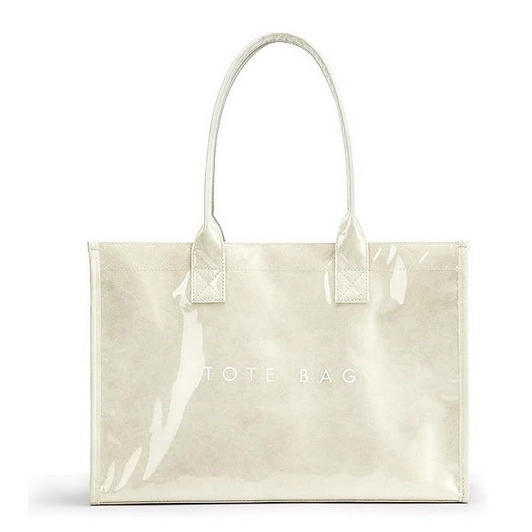
It can be glossy, highly transparent, structured, and economical at scale. Stadium bags, beach totes, promotional pouches, gift packaging, and entry level cosmetic bags often use it.
Buyers should not approve a product based only on the label “PVC.” A thick, cold resistant film and a thin promotional grade film are not interchangeable.
How Do TPU and PVC Clear Bags Compare in Performance?
These are common production tendencies, not rules for every grade. Thickness, additives, welding settings, and construction can change the result.
| Factor | TPU Clear Bags | PVC Clear Bags |
| Hand feel | Softer and more elastic | Firmer and more structured |
| Repeated bending | Usually performs well | Suitable for standard use |
| Cold conditions | Often stays flexible | May become stiffer |
| Abrasion resistance | Generally stronger | Adequate for moderate use |
| Appearance | Clear, often softer looking | Frequently glossy and bright |
| Shape retention | Usually needs reinforcement | Easier to build into rigid shapes |
| Relative cost | Higher | More cost effective |
Failures often begin around zipper seams. The film may look fine, but pulling concentrates stress at the stitch line or welded edge. TPU normally tolerates flexing better. PVC can still perform well when the film is thick enough and the seam is reinforced. Construction matters as much as the material name.
Which Material Fits Different Markets and Use Cases?
The market should drive the specification. A clear event bag used twice has a different engineering target from a travel organizer expected to survive several years.
When Is PVC the Better Choice?
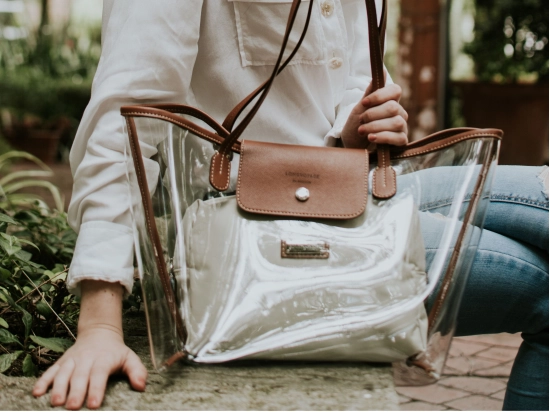
PVC is practical for promotional giveaways, stadium approved bags, transparent packaging, beach totes, and high volume retail programs.
It works well when the customer wants a crisp shape and glossy appearance at a controlled cost. A clear tote for a sports event may only be used a few times. Paying for premium flexibility adds little value.
Simple shapes, heat welded seams, and standard printing can move through development quickly.
When Is TPU the Better Choice?
TPU suits products that will be folded, packed, and reopened many times. Premium cosmetic bags, travel pouches, outdoor accessories, and fashion crossbody bags are typical examples.
The difference becomes obvious in a cold warehouse. Some clear films turn noticeably stiff. TPU usually remains more flexible, reducing whitening, cracking, and uncomfortable handling.
Customers may not recognize the term TPU, but they notice softness, low noise, and how the bag recovers after compression.
When Should You Consider a Hybrid Design?
A full clear film bag is not always the best construction. TPU or PVC can be used only where visibility is needed, with nylon, canvas, PU leather, webbing, or fabric binding added for structure.
A fabric base hides wear. Bound edges improve seam strength. An opaque back panel creates space for branding and reduces film use.
A clear front panel with a woven body often feels more finished and is easier to control during production.
How Do Cost and Customization Affect the Final Choice?
Film price is only one line in the quotation. Thickness, bag size, zippers, webbing, printing, reinforcement, welding time, sewing difficulty, packaging, and inspection all affect unit cost.
Low priced PVC may become expensive if the design needs extra binding. Higher priced TPU may work with a simpler construction. Quote the finished bag, not the film alone.
Tinted or frosted film, colored zippers, screen printing, UV printing, labels, custom pullers, and branded packaging also influence processing. Logo adhesion should be tested on the actual production film.
What Compliance and Sustainability Questions Should Buyers Ask?
TPU should not automatically be called environmentally friendly, and PVC should not automatically be called unsafe. Both statements are too broad.
Request the exact material grade, composition information, plasticizer details where relevant, restricted substance reports, and documents required for the destination market. Check odor, yellowing, migration, and aging performance.
Recycled content and recyclability claims need evidence. A bag made from several bonded materials may be difficult to recycle even when one component is technically recyclable.
How Should Buyers Test TPU and PVC Before Bulk Production?
Approve physical samples at the same thickness. Compare clarity in daylight, check odor after sealed storage, fold the film repeatedly, scratch the surface, pull the zipper, and press the seams.
One useful test is to pack the sample tightly in a carton for several days, then open it in a cooler room. Permanent creasing, blocking, stiffness, and odor become easier to spot.
Test logo durability after bending. Pull handle attachments and zipper ends harder than normal use. Weak points usually appear at transitions, not in the middle of the panel.
After approval, lock the material grade, thickness, color tolerance, surface finish, and construction details into the production specification.
So, Which Material Is Better for Your Market?
PVC is usually the stronger commercial choice for cost sensitive, high volume, structured, and promotional clear bags. TPU is usually better for softer, more durable products designed for repeated use.
A hybrid construction may be the better answer when the bag needs transparency without looking disposable.
Need the Right Clear Bag Material for Your Next Project?
Choosing between TPU and PVC is not just a material decision — it affects product feel, durability, cost, and customer experience. At Chic, we help brands select the right materials and construction methods based on their target market, usage requirements, and budget.
Whether you need cost-effective PVC clear bags for large-scale promotions or premium TPU bags for long-term retail products, our team can support you from material selection and prototyping to bulk production.
Contact Chic today to discuss your custom clear bag project and get a professional recommendation for your market.
FAQ
Q: Is TPU always more durable than PVC?
No. TPU generally handles flexing and abrasion well, but a poorly welded TPU bag can fail before a well designed PVC bag.
Q: Which material is better for clear cosmetic bags?
TPU fits premium reusable cosmetic bags. PVC remains suitable for promotional sets, gift programs, and cost sensitive retail lines.
Q: Can TPU and PVC clear bags be printed with a logo?
Yes. Screen printing, UV printing, transfer methods, and printed inserts may work. Test adhesion and cracking on production grade film.
Q: Which material is better for cold climates?
TPU usually maintains flexibility better at low temperatures. Cold resistant PVC grades are available, but they should be tested.
Q: Should buyers request both TPU and PVC samples?
Yes. Side by side samples make differences in feel, clarity, structure, odor, and recovery much easier to judge.

 consult
 WHATSAPP
 leave message
 top
top