
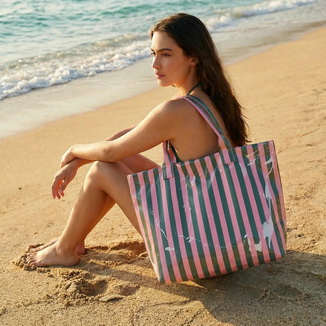


Private Label Bags: A Step-by-Step Guide for New Brands
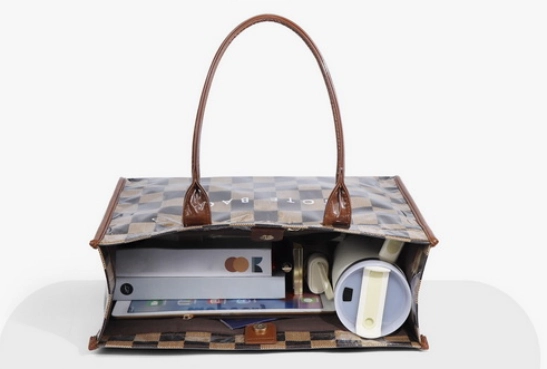
Launching a bag label looks simple. Pick a shape, add a logo, order stock. The trouble sits in the details: material thickness, zipper quality, label placement, and whether the sample still works after twenty uses. Private label bags work when decisions are made in the right order.
What Are Private Label Bags, and Are They Right for Your Brand?
Private label bags are made by a third-party manufacturer and sold under another brand’s name. The base design may already exist, then change through fabric, color, hardware, pockets, labels, logo treatment, or packaging.
This sits between wholesale buying and full OEM development. Wholesale is fast but restrictive. OEM offers more freedom, though it needs more time, quantity, and sampling.
For a new beauty brand, adapting an existing cosmetic bag can be smarter than developing a complex structure from zero. The saved budget can go into the lining, zipper, woven label, or packaging—the parts customers actually handle.
What Should You Decide Before Contacting a Bag Manufacturer?
A manufacturer can only quote what has been defined. “A black tote bag with our logo” is not a product brief. It is the start of a long email chain.
Who Is the Bag Designed For?
Start with the user, not the fabric swatch.
A commuter tote needs different handles from an event giveaway. A hotel cosmetic pouch may prioritize easy cleaning and low cost. A fashion crossbody bag depends more on proportion, hardware, and how it sits on the body.
Retail price matters. A bag intended to sell for $18 cannot carry the same construction cost as one priced at $85.
What Should Be Included in Your Product Brief?
Include the bag type, dimensions, material direction, color references, closure, strap details, pocket layout, logo method, quantity, budget, and launch date. Add sketches or marked-up photos. Rough drawings are fine. Ambiguity is not.
Also note what cannot change. Maybe the logo must stay under 35 mm. Separating “required” from “preferred” prevents small choices from delaying the project.
Which Bag Type and Customization Options Should You Choose?
Bag type should follow the use case. A product can look attractive in a sample room and still fail in daily use.
| Bag type | Suitable applications | Common customization priorities |
| Tote bags | Retail, events, lifestyle brands | Fabric weight, handles, print area |
| Cosmetic bags | Beauty sets, travel, gifting | Lining, zipper, easy-clean surface |
| Crossbody and waist bags | Travel, fashion, outdoor use | Strap comfort, buckles, pocket access |
| Wallets and clutches | Fashion and accessory lines | Edge finish, internal layout, logo detail |
Material choice controls more than branding discussions. Canvas feels casual. Nylon reduces weight. PU leather looks cleaner but needs careful edge control. Oxford fabric suits abrasion-heavy use.
Chic’s range across cosmetic bags, totes, crossbody bags, waist bags, wallets, and accessories is useful when one brand wants several formats with shared details. A beauty label might begin with a cosmetic pouch, then reuse the same zipper pull and woven label on a travel organizer. Consistency comes from repeated details.
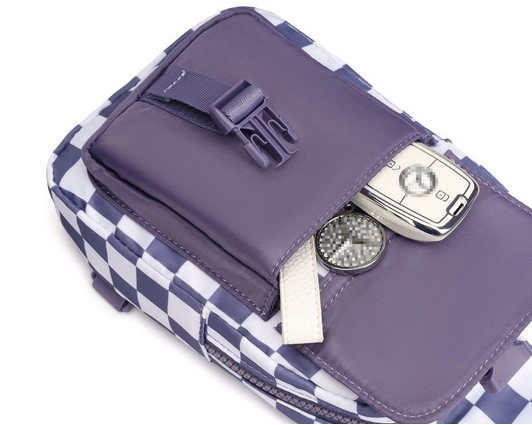
How Does the Private Label Bag Manufacturing Process Work?
The process is straightforward, but unforgiving. Small mistakes made before sampling usually become larger during production.
Step 1: Submit Your Design Requirements
Send the product brief, artwork, references, dimensions, and expected quantity. Ask the supplier to flag missing information before pricing. A useful quotation often begins with questions.
Step 2: Review the Quotation
Check the unit price, MOQ, sample fee, production time, packaging, payment terms, and shipping basis. Confirm whether labels, hangtags, polybags, or cartons are included.
Step 3: Develop and Review the Sample
Measure the sample. Fill it. Open the zipper repeatedly. Wear the strap for an hour. Put a cosmetic pouch near a sink and see how the surface behaves.
Visual approval is risky. A waist bag may look balanced on a table but tilt forward when loaded.
Step 4: Approve the Final Sample
The approved sample should become the production reference. Record material, hardware finish, thread color, logo position, and packaging details in writing.
Step 5: Begin Mass Production and Quality Control
Checks should cover dimensions, stitching, logo alignment, zipper movement, color consistency, hardware, and packing. Textile production has tolerances. Agree on them before production.
Step 6: Arrange Packaging and Shipping
Confirm units per carton, carton dimensions, barcodes, shipping marks, and Incoterms. Packaging mistakes often appear after the bags are finished.
When the bag, logo application, labels, and retail packaging must match, Chic can coordinate them as one production package. That reduces the chance of a correct bag arriving with the wrong label or packaging format.
How Do MOQ, Sampling and Lead Time Affect Your Launch?
MOQ is not just a supplier condition. It is an inventory decision.
| Production route | Best suited to | Typical considerations |
| ODM / private label | Brands adapting an existing design | Lower development workload, faster sampling |
| OEM / custom development | Brands creating a new structure | More revisions, higher commitment, longer setup |
A lower MOQ reduces inventory risk but usually raises unit cost. A higher MOQ may improve pricing and still be wrong when demand is untested.
Sampling often takes longer than planned. A seven-day sample can become three weeks after material confirmation, artwork correction, and shipping. Chic lists starting MOQs of 300 pieces for ODM and 500 pieces for OEM. Treat these as planning references and reconfirm them against the actual specification.
Build the calendar backward from the sales date.
How Can You Evaluate a Private Label Bag Manufacturer?
Look beyond the unit price. A cheap quote becomes expensive when revisions are vague, materials change without notice, or packaging is handled too late.
Evaluate category experience, communication, material access, sample control, inspection standards, and export support. Ask who approves substitutions when a component is unavailable.
A useful supplier should explain trade-offs. Lighter fabric may reduce cost but weaken the shape. A metal logo plate may look sharper but add setup cost and scratch risk. Chic adds value when it connects those choices across the product rather than simply returning a price.
What Mistakes Should New Bag Brands Avoid?
The common failures are ordinary.
A founder chooses fabric by photo. The sample is approved without checking capacity. The logo sits too close to a seam. Barcode labels are discussed after packing. The launch date assumes one clean sample round.
Another mistake is building a collection too early. Five bag styles multiply materials, colors, packaging versions, and quality checks. One focused design usually teaches more.
What Should You Do Before Placing Your First Order?
Define the user, choose the bag type, prepare the specification, compare quotations, and test the sample as a product—not as a display piece.
For an initial project, restraint helps. One bag. One or two colors. Controlled branding. Clear packaging. Chic can support the manufacturing work when materials, logos, labels, and accessories need coordination, but the result still begins with the brief.
Prepare your bag specifications, estimated quantity and reference images, then request a manufacturing assessment and quotation.
FAQ
Q: What is the difference between private label and custom bags?
Private label usually starts from an existing or adjustable design. Custom OEM changes the structure more deeply and may require new patterns, molds, or hardware.
Q: Can a small brand order private label bags?
Yes, though designs, materials, and pricing depend on MOQ. Ask which existing structures can be adapted without unnecessary development cost.
Q: How many samples should be made before production?
One sample may be enough for a simple product. Complex bags often need two or three rounds, especially with new hardware or logo methods.
Q: What files should be sent for the logo?
Vector files such as AI, EPS, or PDF are preferred. Include Pantone references, logo dimensions, and placement notes.
Q: How long does private label bag production take?
Timing depends on materials, revisions, quantity, and packaging. Sampling may take one to several weeks, with mass production taking several more. Plan shipping separately.

 consult
 WHATSAPP
 leave message
 top
top