
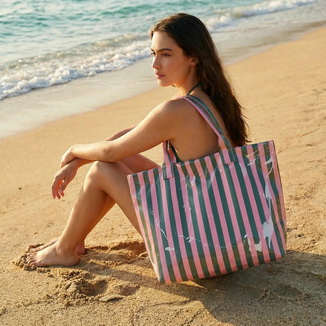


Custom Bag Accessories: A Complete Guide for Brands and Bag Manufacturers

A bag can use good fabric and clean stitching and still feel ordinary. Often, the difference is in the smaller components.
A strap changes comfort. A zipper pull affects every opening movement. Hardware can make a basic tote feel more premium—or make expensive material look cheaper than it is. For brands and bag manufacturers, custom bag accessories are part of the product, not an afterthought.
What Are Custom Bag Accessories?
Custom bag accessories cover useful and attractive parts. These parts are made to fit a bag. They match a collection or brand style too. Useful parts cover straps, buckles, hooks, D-rings, zipper pulls, handles, and clasps. Attractive pieces cover chains, logo tags, charms, keychains, and patches.
Many accessories handle both roles. A woven shoulder strap carries weight. It shows a logo pattern at the same time. These parts appear often on cosmetic bags. They show up on tote bags, crossbody bags, waist bags, wallets, clutches, and promotional bags.
Popular Types of Custom Bag Accessories
No single accessory set fits every bag. A light cosmetic pouch needs different parts than a firm crossbody bag.
Custom Bag Straps
Custom bag straps influence comfort, fit, and look. Usual choices include nylon or polyester webbing, PU straps, cotton webbing, adjustable straps, detachable straps, and printed logo straps.
Width counts. A narrow strap can look nice. It may feel uncomfortable once the bag holds items. The adjustment range needs checks on a real sample. This step matters most for crossbody and waist bags.
Bag Chains and Metal Hardware
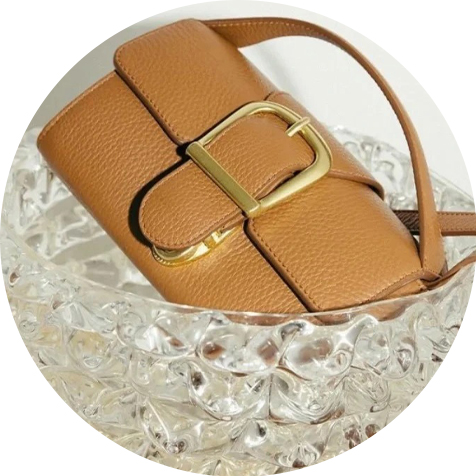
Chains, buckles, rings, hooks, and clasps create strong visual impact even though they are small. Gold, silver, gunmetal, matte black, and antique finishes can change the look of the same bag.
Color matching brings a real problem. Two suppliers may both call a finish “light gold.” The shades can still look clearly different. Physical sample approval works better than depending on names alone. Hardware strength must fit the expected load.
Custom Zipper Pulls
Custom zipper pulls stay small yet stay very visible. They can come from metal, rubber, PVC, webbing, cord, or PU.
Size balance counts. A large metal pull can look too heavy on a small cosmetic bag. A tiny pull feels annoying on a travel pouch. Detailed logos need review at actual production size. Fine artwork can become unclear when it shrinks.
Bag Tags, Charms and Keychains
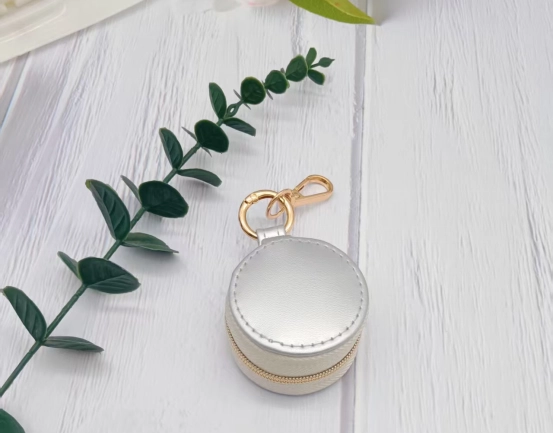
Bag tags, charms, and custom keychains bring character. They do this and leave the main bag construction alone. Options include PVC charms, PU keychains, metal logo tags, woven labels, luggage tags, and decorative pendants.
These pieces do a good job across collections. The same charm can appear on a tote. It can appear on a cosmetic pouch and wallet. This creates a clear link between different products.
How Can Bag Accessories Be Customized?
Most development work focuses on material, branding, and dimensions. Small choices here can soon change cost and how well production runs.
Materials and Colors
Common materials include PU leather, nylon, polyester webbing, canvas, PVC, rubber, zinc alloy, iron, and aluminum. The material should fit the bag. Heavy metal hardware on a light nylon pouch often seems off balance.
Colors can compare with fabric swatches, reference samples, or Pantone numbers. Approving the accessory with the bag material often prevents bad surprises.
Logos and Branding
Logos can go on through screen printing, heat transfer, embroidery, woven labels, embossing, debossing, engraving, or molding.
The method relies on the material. Embroidery is good for fabric and webbing. Engraving fits metal. Molded PVC gives more options with shape and color. Simple logos usually copy better than highly detailed artwork.
Size, Shape and Finish
Accessory dimensions should base on the finished bag. Strap width, chain length, hook opening, D-ring diameter, zipper pull length, and tag thickness all change how easy it is to use.
A hook can fit a ring in theory. It may still turn poorly or rub against the bag edge. Drawings are useful. Physical assembly testing finds issues that drawings miss.
How to Choose the Right Accessories for Your Bags
The right accessory is based on how the bag gets used in real life. Appearance is important. Function should not count as a different matter.
Consider the Bag Type
A crossbody bag often requires an adjustable strap and reliable hooks. A tote may require stronger handles or a detachable shoulder strap. Cosmetic bags rely a lot on zipper performance. Wallets need compact hardware since space inside stays small.
The accessory should fix a real need in the product first. Looks come after that point.
Balance Appearance, Function and Cost
More expensive hardware does not always mean better. A promotional pouch can do well with molded plastic parts. A fashion handbag can support plated metal hardware and custom logo pieces.
Target price, weight, expected use, and shipping cost all play a role. The right pick usually matches the complete item.
Test Accessories Before Bulk Production
Samples should be tested as finished bags. Open the zipper repeatedly. Adjust the strap. Load the bag. Pull on the hooks. Check whether metal parts scratch each other.
A small issue at sample stage is manageable. At 5,000 pieces, it becomes expensive.
What Should You Ask a Custom Bag Accessories Manufacturer?
A capable bag accessories manufacturer should give clear answers before tooling or bulk production starts.
-
What customization options are available?
-
What is the MOQ for custom accessories?
-
Can the supplier match Pantone colors?
-
Can I approve a sample before mass production?
-
Can accessories and finished bags be manufactured together?
It is also worth asking whether the supplier can manufacture the finished bags and accessories together. That can remove a surprising amount of coordination work.
Why Source Bags and Accessories From One Manufacturer?
Using separate suppliers for bags, straps, hardware, tags, and packaging creates more variables. Colors may not match. Dimensions can shift slightly. One late component can hold the entire order.
Working with one manufacturer simplifies changes to samples. It makes quality checks easier. Chic supports custom bags along with straps, keychains, tags, logo applications, hardware coordination, and packaging. For brands, wholesalers, and distributors this approach works better than handling multiple factories for one product.
Conclusion: Build a More Distinctive Bag Collection with Custom Accessories
Little parts alter the way a bag looks, feels, and performs.
The right strap makes it more comfortable. Good hardware gives smoother action. A well-made zipper pull or logo charm provides something the customer uses daily.
When you develop a new bag collection or improve a current design, Chic is ready to customize bags, straps, keychains, tags and other bag accessories according to the materials, colors, logo and packaging you need. Reach out to our team for a talk about your project or to get a sample.
FAQ
Q: What bag accessories can be customized?
Common options include straps, zipper pulls, chains, buckles, D-rings, hooks, logo tags, keychains, charms, handles, and labels.
Q: Can custom bag accessories include a brand logo?
Yes. Logos can be printed, embroidered, woven, engraved, embossed, debossed, or molded depending on the material.
Q: Should accessories be sampled before bulk production?
Yes. Sampling helps confirm color, fit, hardware performance, logo quality, and overall appearance before mass production.
Q: Can bags and accessories be manufactured by the same supplier?
Yes. A one-stop manufacturer can coordinate bags, straps, hardware, tags, keychains, logo applications, and packaging under one development process.

 consult
 WHATSAPP
 leave message
 top
top