
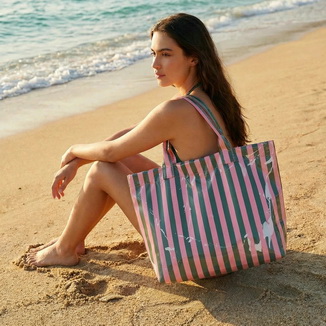


How to Specify Mesh Opening Size for a Beach Bag
Picture a sample review with sand on the table. The first shake is satisfying: grit pours out of the bottom. Then a little shell charm drops out with it. That’s the mesh decision in one small mess. We choose a mesh by watching what it loses. Leave the swatch on the table for a moment; name the smallest thing its pocket must keep. The main body can drain. Keys and small finds need another zone, maybe a zipped one. Mesh stretches when it’s sewn and loaded. That’s part of the decision.
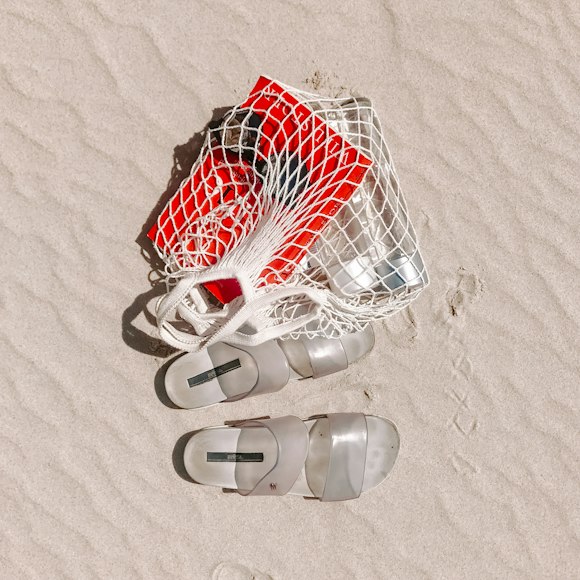
What Does Mesh Opening Size Change in a Beach Bag?
Mesh is a trade. Bigger openings let water and loose sand out more readily. Finer ones hang onto smaller things, and sometimes the grit too. The beach tells you quickly which mattered. After damp sand dries, it sticks near the seam or gathers in the mesh corners. A swatch shaken over a bin can’t show you a sewn pocket’s weak spot.
On paper, both panels are just mesh. At the shore, one may carry a rolled towel while another holds a key. That’s a different job. We would give the body room to shed sand, then check each pocket against the smallest thing assigned to it. The answer might be one fabric throughout. It might not.
Tip the sample sideways and tug the pocket edge gently. An oval opening can widen. We use a small clip to challenge it: let it turn, pull the mesh, then see if it stays.
Which Mesh Bag Opening Fits the Smallest Contents?
We’d clear the review table and set the pocket on its side. Which object would you be annoyed to lose? A key? That shell? Put it by the opening. A charm might be 25 mm long but only 14 mm wide at one end. The mesh measures 12 mm at rest and 15 mm under a light pull. Turn the charm. Its narrow end could slip through. The longest measurement can fool you.
Moisture matters too. Beach toys are smaller than towels, and fine mesh can hold damp sand. Put the real contents on the table before settling an opening size.
Openings vary across a panel. Check ten across the body and near a pocket seam. Record the shortest and widest in millimeters. Pull lightly and measure again. A hard yank tells us little about a loaded bag. Mark the stretch direction.
We put mesh and trim materials in the same discussion. A bound edge changes the opening. So can the seam. Don’t let a swatch decide for a finished pocket.
How Can You Test Mesh Openings in a Bag Sample?
We like a test another teammate can repeat. Keep the frame and stitch finish alike; change the mesh alone.
Check What Changes under a Gentle Pull
Ten readings across the body and pocket seam show how much a panel varies. A ruler usually works; use calipers for a small hole. Note the shortest and widest at rest, then under light tension. A hard yank proves little. Pull only as far as the contents would.
If one sample has a stiff bound edge and the other has a narrow seam, you’re changing two things at once. Keep the panel and its finish alike, then compare the mesh. Bring both pieces to a design review with the measurements. The difference is easier to discuss when you can put a finger on it.
Check Sand Release and Pocket Retention
Weigh 200 g of dry sand for each bag. Ten gentle shakes make a useful comparison. Lay white paper underneath so loose grit shows. Check how much sand stayed and whether the smallest assigned item left. Repeat with damp sand. Keep the amount and motion the same. Change the scoop and you’re measuring the scoop.
Damp sand leaves a rim near a seam that dry sand missed. Touch the lining and corners; note where grit stays.
Carry the Sample with Its Planned Load
Put in the sample contents. Add a damp towel if it’s a beach-day bag. Carry it by the usual handles across the office and set it down. Look again: did the small item stay? Did a seam move? Record it.
Give both samples the same load. One bottle or towel in the wrong pocket changes the pull; then the comparison is no good. Ten minutes of setup beats an argument later.
How Do Beach Bag Pockets Change the Mesh Specification?
Sand is welcome outside the tote. Keys are not. Keep the main section open for larger beach gear, then give the small things somewhere else to go. A closed pocket is one option for a phone or key. That way the mesh doesn’t have to handle every job.
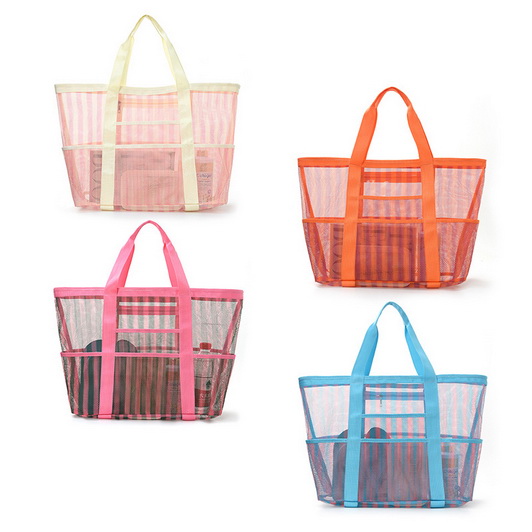
One of our mesh totes measures 60.5 x 20 x 37.5 cm. Its stated capacity is four to six towels. The layout has eight external mesh pockets and an internal waterproof zipper pocket. That’s a lot of zones in one bag, and each can be checked with the item it is meant to hold. No opening width is specified for this configuration. We’d add that measurement to the next sample record.
No CAD drawing needed for this pass. A pencil outline will do: one large shape for the body and a few marks for the pockets. Label the smallest item each one has to hold. It beats sending the phrase “use mesh” around and getting three different interpretations.
How Should You Finalize a Beach Bag Mesh Specification?
Keep the sample note short. A quick drawing helps. Add these details beside it:
Opening measurements in millimeters, relaxed and under light tension
The smallest item assigned to each pocket
Whether the test used dry sand, damp sand, or wet gear
The load and shake method used for each comparison
If the sand drains but the charm falls through, write both results down. That’s more useful than a single pass or fail. Working through a mesh prototype? Send us your sample notes with the pocket map and the smallest contents. We can look at the openings and the use test together before the next sample is made.
FAQ
What Mesh Opening Is Best for a Beach Bag?
The one that matches the job. Measure the smallest item for that zone, then see what the finished mesh does when pulled and loaded.
Will Sand Always Fall through Mesh?
No. Dry grains may pass while damp sand stays near the weave or seam. Test both when the bag is meant for a wet beach day.
Can a Mesh Pocket Hold Small Beach Items?
It can, but check the stretched opening with the actual item. If a piece could vanish in sand, we would use a zip pocket or run a loaded sample test first.
When Does a Beach Bag Need a Zipper Pocket?
For a phone or key, the closed zone is useful. Try it with damp hands and the real contents before making that call.

 consult
 WHATSAPP
 leave message
 top