


Tote Bag Gussets: How Base Depth Changes Everyday Use
You can spend ages choosing a tote’s colour without turning it upside down. Yet the folded fabric underneath may decide whether the bag works for your customer. Open it and you have somewhere for a box to sit. That’s the work of a tote bag gusset: creating depth, either just at the bottom or up the sides as well. A notebook barely asks anything of the base. Add a lunch box and the same tote has a very different job.
Picture a conference welcome bag after the morning session. The programme is still inside. Someone has added a water bottle and a boxed lunch, and now the lower corners stick out against their leg. Making the bag taller wouldn’t solve that. The missing space is underneath.
For a brand developing an everyday tote, that’s a useful place to start.
Which Tote Bag Gusset Shape Fits the Contents?
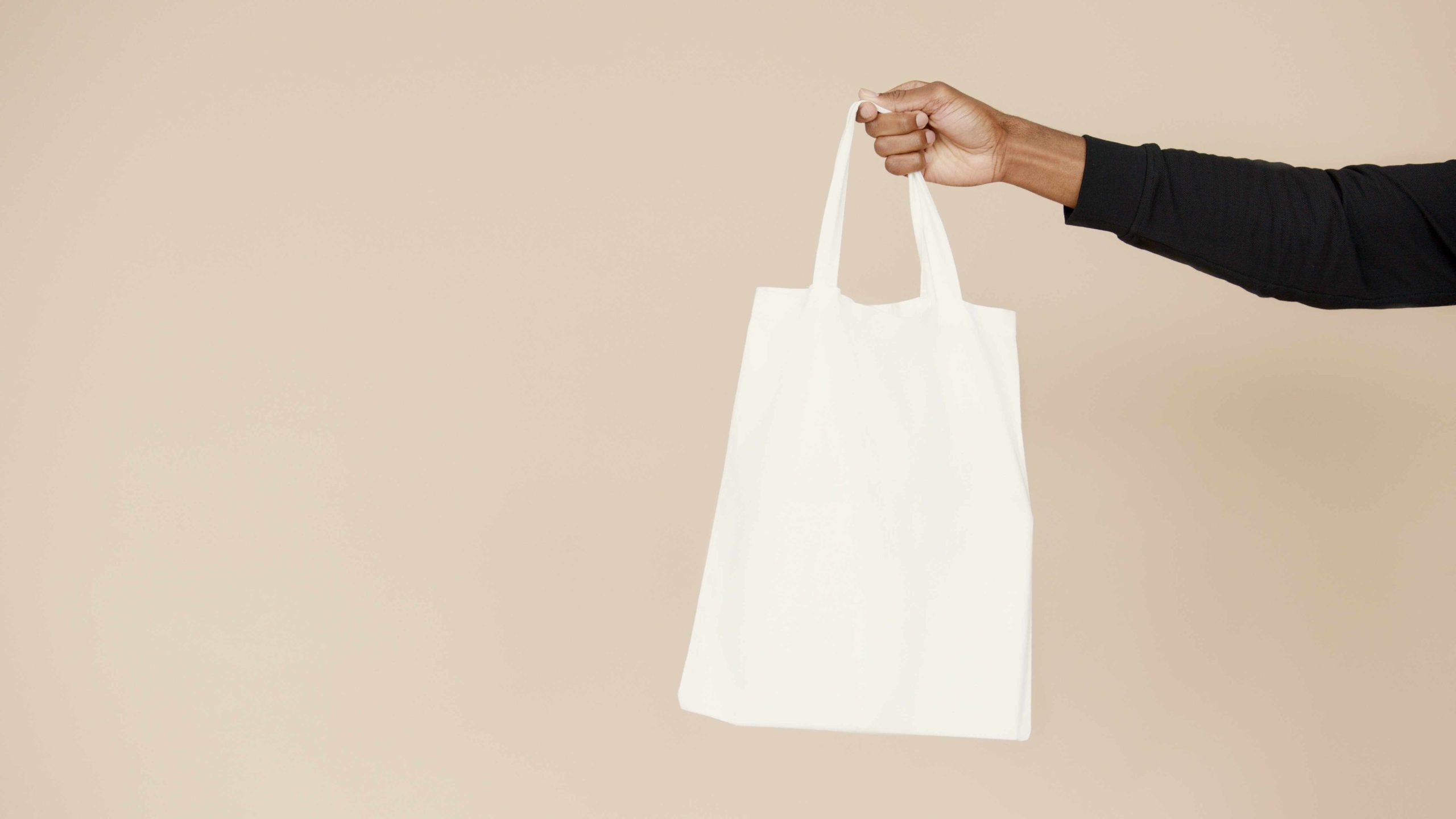
With tote bags, a front view leaves out quite a lot. We’d want to see underneath before settling on a shape.
A Flat Tote for a Thin Load
For the catalogue-only version of that conference bag, there’s a good argument for leaving the bottom flat. The front and back simply meet at a seam. No additional depth. Why add more cloth to accommodate a few sheets of paper? Behind the registration desk, a neat stack of empty bags is useful in its own right.
Put a thick box inside and the panels have to wrap around it. Some of the width you saw on the flat bag now goes around the sides of the box. The fabric may accommodate it, but the front no longer lies as it did in the artwork mockup.
A Base That Opens for Bulkier Items
A bottom gusset opens out below the contents. Boxed corners can also create a base without a separate bottom panel. A full gusset carries that depth up the sides.
For bulky contents, those distinctions matter. A generous bottom can still sit beneath a narrow mouth. The box has to get through that opening before the extra space below can help.
How Much Tote Bag Base Depth Is Enough?
We would start with the awkward item in the intended load. The folded cardigan can wait; the lunch box is less forgiving.
Start with the Widest Rigid Item
Let’s give that lunch box a 24 × 10 cm footprint. On a base only 8 cm deep, its 10 cm side overhangs by 2 cm in total. You can see the problem on paper before sewing anything. Tilting the box might get it into the bag, but that isn’t much help when lunch needs to stay level.
A 10 cm base sounds right. It’s also a tight fit. Did those measurements include the little lip around the lid? And where will the lining sit? We’d try a slightly deeper sample here. If the lining comes up with the box when you pull it out, the fit still needs work.
Put the Litre Figure in Its Place
Now put the lunch box aside for a moment. What would extra depth do to the space on the drawing? For this example, each outline is a perfect rectangular box, 30 cm wide by 35 cm high:
|
Base Depth |
Width × Height × Depth |
Rectangular Volume |
|---|---|---|
|
8 cm |
30 × 35 × 8 cm |
8.4 litres |
|
12 cm |
30 × 35 × 12 cm |
12.6 litres |
|
16 cm |
30 × 35 × 16 cm |
16.8 litres |
Multiply the three centimetre measurements and you get cubic centimetres; dividing by 1,000 gives litres. So the change from 8 to 12 cm adds 4.2 litres to the drawn shape. That’s 50% more space for a depth increase you could cover with a few fingers.
Of course, a sewn tote isn’t a perfect box. Its rounded corners eat into that neat calculation. A narrowed mouth can make some of the space below difficult to use. We’d use these numbers to compare drawings, then bring the lunch box back for the fit check.
When Does a Wider Tote Bag Base Become Awkward?
Try the deeper sample over a shoulder with only a book inside. This is the version of the bag that a capacity calculation misses: an ordinary day with very little to carry.
Does the base project into the arm’s path? Does an empty corner keep brushing the hip? Those would bother us on a crowded train, even if we liked the same roomy bag for towels at the beach.
There’s another temptation here: making a sagging base wider. Before changing the pattern, compare how your bag materials behave with the load inside. If a book pulls the middle down, a supporting insert may do more for the outline than extra depth. It also leaves the customer with a loose piece to take out and put back. We’d want a reason for adding it.
How Do You Measure a Tote Bag Gusset?
Set the sample on the table with its base opened out. Run the tape from the front edge to the back edge of the base. There’s no need to stretch the cloth to get a pleasing number. Instead, take a photo showing both ends of the tape and keep those reference points for the next sample.
For the box, we need the inside reading. Outside finished bag dimensions belong in a separate note. A lined base can look generous from underneath while offering less room inside.
Write “opened base, empty bag” beside the result. Otherwise, someone may measure the fold while it’s tucked in. They might even read the width off the cutting pattern, where the fabric still includes the allowances that disappear into seams.
For a tapered tote, add the opening measurement too. Then put the actual contents in. Try getting lunch back out with the notebook still there. If you have to empty the bag onto the table, we’d go back to the shape before approving it.
Which Tote Bag Base Should You Try Next?
If two depths look equally promising, put the same contents into both. Carry them half full as well as full. We wouldn’t choose the larger one just to put a bigger litre figure beside it.
Working on a Chic tote? Put the intended contents together for a photo and send us that alongside a side sketch. A box’s measurements are especially useful. We’d rather discuss where those corners will sit than guess what “roomy enough” means for your design.
FAQ
Is a 10 cm Gusset the Same As a 10 cm Fold?
No. A fold measurement may describe only part of the opened depth. Ask where the tape starts and ends. “10 cm finished depth across the open base” is much clearer than “10 cm gusset” beside an unlabelled drawing.
Will a Gusseted Tote Stand Up by Itself?
An empty soft tote may simply slump. A broad bottom doesn’t hold the sides upright. For a display that needs a standing bag, try it on the actual counter. Make clear whether you’re expecting that shape empty or only after filling it.
Does a Deeper Gusset Make a Tote Stronger?
There’s no strength rating hidden in the depth measurement. A customer might see the extra space and add another bottle, but the handle attachments haven’t become stronger. We’d check the complete bag with the intended weight before saying how much it can carry.
Can a Gusseted Tote Still Fold Flat?
A soft bottom fold can tuck back underneath the bag, so yes. A fixed board is another matter. If compact packing is part of your plan, pack the sample that way and reopen it; a stubborn crease at the corner may change your mind.

 consult
 WHATSAPP
 leave message
 top