



How to Measure Backpack Volume: A Practical Guide for Brands
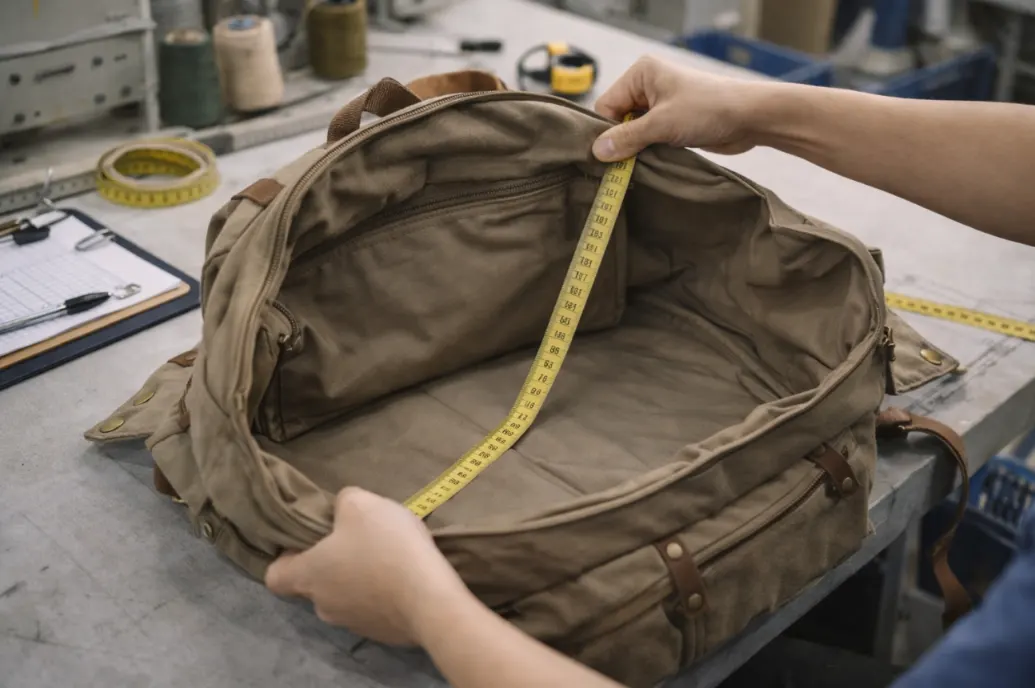
For brands, backpack volume is not a “nice-to-have” spec. It affects user experience, merchandising claims, carton planning, and whether the factory can execute your design consistently across repeat orders. The problem is that backpack capacity numbers are often not comparable from one supplier to another, because the definition and the method can change. That is why teams keep asking two connected questions: how to measure backpack volume and how to measure backpack dimensions in a way that stays consistent from sampling to bulk production.
In this context, backpack volume for brands is not just a marketing label, but a shared specification that connects design intent, factory execution, and customer expectations.
This guide focuses on practical, repeatable methods used in real projects. You will see when to use physical filling, when backpack volume calculation is useful, what mistakes cause “20L” bags to feel totally different, and how to turn measurements into a clear backpack capacity specification your factory can follow.
How Backpack Volume Is Defined in Manufacturing
Most factories and brands express volume in liters, but the definition of “total liters” is where confusion begins. Some teams measure only the main compartment. Others include front pockets, side pockets, and even expandable sections. A credible backpack volume measurement approach starts with agreement on scope:
-
Main compartment volume: the core usable space
-
External pocket volume: front organizers, side pockets, quick-access pockets
-
Expandable volume: only if expansion is part of the product’s intended use
If you do not define scope, you can measure correctly and still end up with the wrong number for your listing or catalog. For B2B programs, the goal is backpack volume consistency across SKUs and reorders, not a one-time number that looks good on paper.
Method 1: Physical Filling Methods Used in Factories
Physical filling is often the most intuitive way to measure backpack capacity, because it estimates the real space that can be occupied. It is also common in factory environments when teams want a practical reference across multiple styles.
Ball or Pellet Filling
This backpack filling method uses uniform items (often small balls or pellets) to fill compartments, then converts the total fill quantity into liters.
How it works in practice:
-
Close all internal dividers the way the backpack is intended to be used.
-
Fill the main compartment fully but consistently (avoid compressing or forcing).
-
Empty the fill into a calibrated container to get total volume.
-
Repeat the process for external pockets if your volume definition includes them.
Why brands use it:
-
Closest to “usable” volume in real life
-
Works well when internal shapes are complex
Where it can go wrong:
-
Results depend on how tightly you pack the fill
-
Different fill sizes can change how gaps and corners are counted
-
If teams fill pockets differently, numbers stop being comparable
If you rely on a ball approach, document the fill type and the filling rule. Otherwise, two teams can run the same test and produce different liters.
Foam or Soft-Material Filling
Some factories use foam, soft blocks, or other compressible materials in early sampling when they do not have standardized pellets available. It can be useful for rough comparisons, but it is more sensitive to technique.
Strengths:
-
Easy to repeat in a sample room
-
Helpful for early “relative capacity” checks
Limitations:
-
Compressibility can inflate results
-
Not ideal for final marketing numbers unless the method is standardized
For a brand-facing backpack capacity specification, treat foam-based filling as a development tool, not the final truth.
Method 2: Dimensional Calculation Based on Internal Size
Dimensional calculation is a common engineering-style method, especially when you need quick estimates during design planning. But it requires accurate internal measurements, which is why how to measure backpack dimensions matters.
How to Measure Backpack Dimensions for Volume Work
When brands ask how to measure backpack dimensions, they often measure external size and assume it equals internal capacity. That creates inaccurate backpack volume calculation results. For volume estimation, focus on internal usable space:
-
Empty the bag and open compartments fully.
-
Identify the internal length (top opening to bottom), width (side to side), and depth (front to back) of the main compartment.
-
Measure at the most usable points, not just the widest exterior bulge.
-
Note structural elements that reduce usable space, such as padding thickness, stiff panels, curved bases, and laptop sleeves.
Then convert to volume:
-
Internal volume (cm³) = length × width × depth
-
Liters ≈ cm³ ÷ 1000
This works best when the compartment is close to a rectangular shape. Many backpacks are not. Curves, tapering, and pockets reduce usable volume. That is why dimensional methods are most accurate when used as a design-stage reference, then validated using a physical fill method later.
Where Dimensional Calculations Help Brands
-
Early-stage concept comparisons (Style A vs Style B)
-
Spec planning before samples exist
-
Quick checks during ODM selection when you are comparing base patterns
Where They Mislead
-
Bags with curved fronts or tapered bases
-
Structured padding that consumes internal space
-
Multi-compartment designs where “total volume” is not a simple sum
A simple rule: use dimensional calculations to predict, but use physical filling to confirm.
Method 3: Comparative Volume Referencing
Comparative referencing is common in ODM programs: you evaluate a new design by comparing it to a known backpack with a trusted capacity. This is quick and practical, but it can hide important differences.
How it works:
-
Select a reference backpack with a capacity your team trusts.
-
Compare internal space, pocket layout, and loading feel using the same everyday items.
-
Note differences in usable organization and access.
Advantages:
-
Fast in early meetings
-
Helpful when you are reviewing samples or showroom models
Risks:
-
Different structures can “feel” similar while measuring differently
-
Pocket distribution can change perceived capacity
-
A backpack with the same liters can hold less if the opening is narrow or the base tapers
If you use backpack volume comparison, treat it as a screening tool, not the final measurement method.
Common Volume Measurement Mistakes Brands Should Avoid
Most “capacity disputes” come from predictable mistakes. These are the ones to avoid:
-
Mixing methods: using dimensional calculation for one SKU and filling for another, then comparing results
-
Unclear scope: not specifying whether external pockets are included
-
Sample-to-bulk drift: measuring a sample, then changing materials or structure before production
-
External-only dimensions: measuring outer size and using it for internal volume
-
No tolerances: expecting every unit to match the exact liter value without measurement tolerance
If you want backpack volume measurement that survives scale, standardize the method and document it.
Which Measurement Method Should Brands Use at Each Stage?
A strong process uses different methods at different times, but keeps the reporting standard consistent.
| Project Stage | Best Method | Why It Works |
|---|---|---|
| Concept & initial design | Dimensional estimate | Fast comparison and early planning |
| Sampling & revisions | Fill method + dimension checks | Confirms usable space and catches shape issues |
| Pre-production validation | Factory-standard fill method | Ensures repeatability before bulk |
| Marketing & catalog specs | One fixed method + clear scope | Maintains consistency across SKUs |
In early stages, teams often start with how to measure backpack dimensions, then validate with a physical fill method once samples exist. The key is to avoid publishing numbers until you have confirmed them using your chosen standard.
How Volume Measurement Connects to Backpack Manufacturing
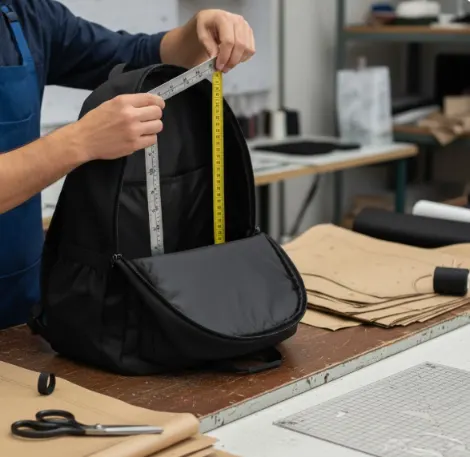
Volume measurement is not separate from production. It influences pattern choices, padding thickness, pocket structure, and reinforcement decisions. When brands change materials—thicker foam, stiffer panels, different lining—internal space can change even if external size stays the same. That is why backpack design specifications should connect measurements to manufacturing realities.
In practice:
-
Pattern changes can shift usable depth and opening size
-
Strap and back panel padding can reduce internal volume
-
Pocket construction can consume space or improve usability depending on design
If you lock a backpack capacity specification too early without linking it to the backpack manufacturing process, you can end up with a product that “meets liters” but fails in real usability, or a product that feels right but does not match your published capacity.
Conclusion: Volume Accuracy Builds Product and Brand Trust
When brands treat volume as a system, not a guess, they reduce returns, avoid listing conflicts, and improve customer expectations. The best results come from combining methods: estimate with dimensions, confirm with filling, and report using one standardized approach. If your team can explain how to measure backpack volume and how to measure backpack dimensions consistently, your specs become easier for factories to execute and easier for customers to trust.
Chic’s Approach to Measurement-Ready Production Specs
Chic supports brand projects by aligning backpack capacity targets with production-ready specifications. That includes defining measurement scope, confirming internal dimensions during sampling, and validating volume using repeatable factory methods before bulk production. This measurement-first discipline helps reduce discrepancies between samples and mass production, improving volume consistency across reorders and expanding SKU lines.
FAQ
Q1: What is the most accurate backpack volume measurement method for brands?
A: Physical filling is usually the most accurate for usable space, but only if the fill type and packing rule are standardized. Many brands estimate with dimensions first, then confirm with filling.
Q2: How do you measure backpack dimensions correctly for volume calculations?
A: Measure internal usable length, width, and depth of the main compartment, not the external silhouette. Account for padding, curved bases, and internal sleeves that reduce usable space.
Q3: Should external pockets be included in total backpack capacity?
A: It depends on your standard, but you must define it clearly. Many brands report main-compartment liters separately from pocket capacity to avoid confusing comparisons.
Q4: Why do two backpacks labeled 20L feel different in real use?
A: Different measurement methods, different pocket layouts, and different internal shapes can change usable space. A narrow opening or tapered base can reduce practical capacity even if liters match.
Q5: When should brands finalize the backpack capacity specification?
A: Finalize after pre-production validation, when the materials, structure, and factory process are locked. Publishing liters before that increases the risk of mismatch between samples and bulk production.

 consult
 WHATSAPP
 leave message
 top
top