



Waterproof Bag Materials: What Brands Should Know Before Production
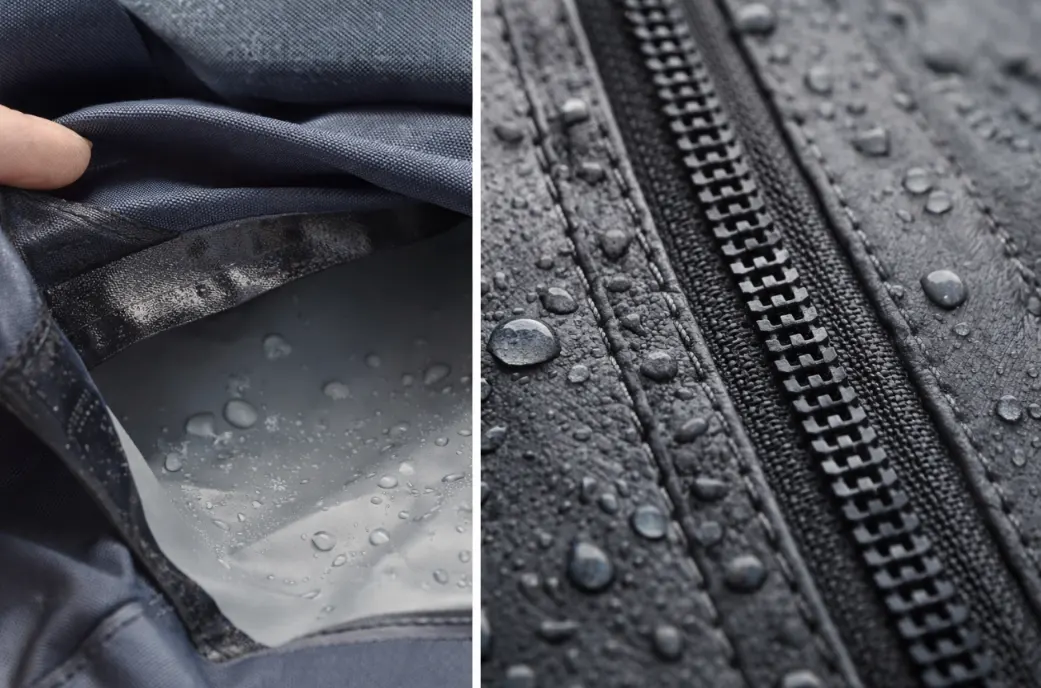
“Waterproof” sounds like a simple claim, but in real product development it is a materials decision that affects cost, usability, and manufacturing stability. When brands research waterproof bag materials, they often find mixed definitions and inconsistent performance across suppliers. That is because waterproof results are rarely created by one fabric alone. They come from a material system: the outer waterproof bag fabric, the internal structure and waterproof lining for bags, and the construction choices that decide whether seams and openings become leakage points.
Many teams still ask, what bag material is waterproof, but in manufacturing the more useful question is how long that waterproof performance can be maintained across repeated use and production batches. This guide breaks down the most common waterproof fabric for bags, where “waterproof” performance actually fails, and what you should evaluate before you lock specs and place a PO.
Water Resistance vs Waterproof: A Critical Distinction for Bags
Before picking a waterproof material, align on performance expectations. “Water resistant” usually means it can handle light rain and splashes for a limited time. “Waterproof” implies stronger protection, sometimes including short exposure to heavy rain or brief contact with water, depending on how the product is positioned. In practice, most bags marketed as waterproof are closer to highly water-resistant unless they combine the right materials with seam control.
This is not just semantics. If your product page implies waterproof protection but your construction leaves stitch holes exposed, you invite customer disputes and returns. The earlier you define what waterproof means for your use case—commuter rain, bike spray, travel handling, or wet environment use—the easier it becomes to choose the right material system and manufacturing approach.
Main Types of Waterproof Bag Fabrics Used in Manufacturing
When brands evaluate waterproof material for bags, the real decision is not about a single fabric, but about how different material systems perform once they enter production. Below are the most common families used in waterproof bag manufacturing, with the trade-offs brands should consider.
Coated Fabrics (PU, TPU)
Coated fabrics are widely used because they are scalable and cost-effective. A base textile (often polyester or nylon) is combined with a coating layer to reduce water penetration. PU is common for general water resistance. TPU is often used when brands want improved flexibility, abrasion resistance, or a stronger barrier feel.
What brands like:
-
Accessible cost structure for volume programs
-
Familiar processes for many factories
-
Good performance for rain and splashes when construction is solid
Where projects break down:
-
Coatings can crease or show wear depending on thickness and use
-
The “feel” can shift between batches if the coating spec is not controlled
-
Waterproof performance can be undermined by seams and zippers even if fabric is strong
Laminated Fabrics
Laminated fabrics combine layers—often a face fabric plus a membrane or film layer. Compared with simple coatings, lamination can improve consistency and barrier performance, but it may affect softness, weight, and cost. For some brand lines, lamination is chosen when the bag needs a more reliable barrier than a basic coating can provide.
Strengths:
-
Strong barrier performance as part of a material system
-
Better stability when specs and sourcing are controlled
-
Suitable for products positioned above entry-level waterproof claims
Limitations:
-
Increased weight or stiffness depending on layer choices
-
Higher cost and potentially higher MOQs upstream
-
More sensitive to manufacturing variables like heat, bonding, and handling
Inherently Water-Resistant Fabrics
Some brands rely on tightly woven nylons or polyesters with water-repellent finishing. These can perform well against light rain, but they are not automatically “waterproof.” This is where content often gets misleading: the base fabric might resist water briefly, but without a barrier layer and seam strategy, the bag will eventually leak through stitch lines and openings.
This category is often best for “weather-ready” products rather than hard waterproof positioning, unless combined with coatings, linings, and construction controls.
Waterproof Linings: When the Inside Matters More Than the Shell
Brands often focus on the shell and overlook waterproof lining for bags. In many real scenarios, the lining does the work of protecting contents when moisture enters through zippers, seams, or openings. A lining strategy can also reduce the impact of small exterior wetting events by adding an internal barrier.
However, lining is not a shortcut. Changing only the lining does not automatically create a waterproof bag. It simply changes where water ends up. If your outer fabric absorbs water or your seams leak heavily, the interior will still get wet—just more slowly, or in different patterns.
A practical approach is to treat lining as one component of the waterproof system:
-
Outer fabric manages initial contact and surface wetting
-
Lining protects the contents if moisture gets past the shell
-
Construction controls decide whether those layers can actually perform

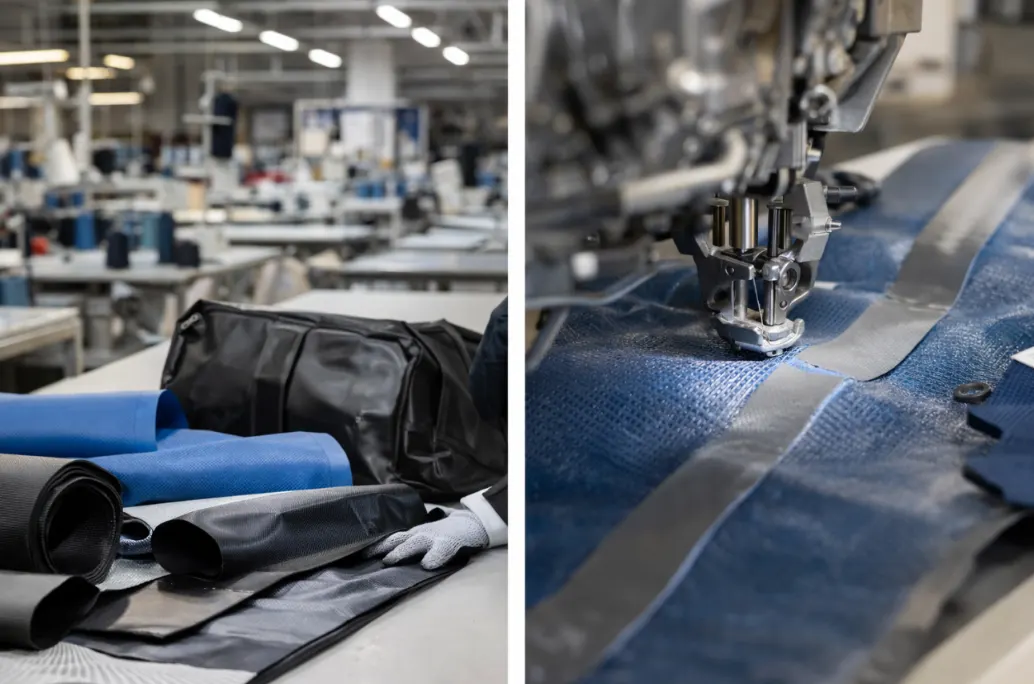
Coatings, Seams, and Construction: Where Waterproof Performance Breaks Down
The most common failure point is not the fabric. It is the build. In waterproof bag manufacturing, seams create stitch holes, and every opening is a risk zone. This is why many bags with strong fabric still leak: the fabric is fine, but the construction is not designed to protect it.
Key risk zones brands should evaluate:
-
Main seams on the body panels
-
Bottom seams and stress points (where abrasion and pressure concentrate)
-
Zipper tracks and zipper ends
-
Pocket attachment seams
-
Strap anchor seams (often reinforced, but also heavily stitched)
If you position a bag as waterproof, you need to consider seam strategies (including the feasibility of taping or other sealing methods) and zipper choices that match the performance goal. Otherwise the product becomes “waterproof on paper” but unreliable in use.
Material Trade-Offs Brands Must Evaluate Before Production
Selecting waterproof bag materials is always a trade-off decision. The best material in theory can become a poor choice if it does not fit your target customer, cost structure, or manufacturing capability.
Common trade-offs to address early:
-
Waterproof barrier vs weight and stiffness
-
Waterproof performance vs breathability and comfort
-
Surface feel vs abrasion resistance
-
Cost vs repeat-order stability
-
Strong barrier materials vs higher defect sensitivity in sewing and finishing
This is also where teams should reframe the common question: what material is used for waterproof bags. In real projects, the answer depends on how you balance fabric construction, coatings, linings, and the factory’s ability to control seams and finishing.
How Waterproof Material Choices Affect Bag Manufacturing
Materials change how bags are made. Some waterproof fabrics are thicker, stiffer, or less forgiving during sewing, which can affect seam appearance and defect rates. Coated or laminated materials can also respond differently to needle holes, heat, or folding, which matters for high-volume production.
In practical terms, waterproof materials can influence:
-
Cutting behavior and edge fraying
-
Sewing speed and stitch quality
-
Seam durability under stress
-
Rework rates when appearance standards are tight
-
Supplier dependency if only a few sources can meet your spec
If you want consistent outcomes, treat waterproof materials as part of your production plan, not just a design decision. Lock key specifications early, confirm how the factory handles seam risk zones, and validate performance at a pre-production stage rather than relying on a single prototype.
Conclusion: Choosing Waterproof Bag Materials Is a System Decision
Brands succeed with waterproof programs when they stop treating waterproof as a label and start treating it as a system. Waterproof bag materials are only one part of the result. Performance also depends on how outer fabric, lining, and construction work together, and whether your supplier can maintain that system across batches and reorders. If you define your waterproof target clearly, choose the right waterproof fabric for bags, and control the build where leakage risk is highest, you can create a product that performs consistently in real use.
Chic’s Approach to Material-Driven Production Decisions
Chic supports brands by treating material selection as a production decision from the start. That includes aligning performance targets, evaluating fabric and lining options as a system, and validating critical construction zones that typically cause leakage. This approach helps brands reduce mismatches between sample performance and bulk production, and it supports repeatable results as waterproof programs scale.
FAQ
Q1: Are waterproof bag fabric and waterproof lining for bags both necessary?
A: Not always, but they serve different roles. The shell manages surface wetting; the lining protects contents if moisture gets past openings and seams. Many reliable products use both as a system.
Q2: What bag material is waterproof for everyday commuter products?
A: Many commuter lines use coated fabrics because they balance barrier performance and cost, but the final result depends on seam and zipper choices as much as the fabric itself.
Q3: Why does a bag leak even when the fabric is labeled waterproof?
A: Most leaks happen at seams, stitch holes, and zipper areas. Without construction controls, strong fabric alone cannot guarantee waterproof performance.
Q4: Does choosing waterproof material for bags increase manufacturing cost?
A: It can. Some materials raise material cost, increase handling sensitivity, or require stricter QC. The bigger cost driver is often the construction steps needed to protect seams and openings.
Q5: What material is used for waterproof bags in higher-performance programs?
A: Higher-performance programs often combine laminated or robust coated fabrics with a lining strategy and construction controls. The specific choice depends on durability targets, weight limits, and factory capability.

 consult
 WHATSAPP
 leave message
 top
top