


How to Choose the Right Material for Custom Cosmetic Bags
A cosmetic bag may look simple, but its material affects durability, weight, cost, branding and customer experience.
A travel pouch faces friction inside luggage. A promotional bag must meet a strict budget. A luxury beauty set needs a better hand feel. The right fabric depends on use, audience and brand position. There is no universal best choice.
What to Consider Before Choosing a Material
The material decision should begin with the product brief. A fabric that looks good in a photo may not perform well after repeated use.
Define the Bag’s Main Use
Consider where the bag will be used.
An everyday makeup pouch may only need a light and washable outer fabric. A travel cosmetic bag may face damp bathrooms, spilled lotion and constant handling. A professional makeup artist’s case needs stronger construction and more reliable load resistance. Promotional bags follow a different logic. Luxury gift bags need a refined texture that supports the product inside.
Consider Your Target Customer and Price Point
The customer and retail price set practical limits.
Polyester suits affordable promotional products. Nylon offers a smoother feel and stronger performance. PU creates a premium leather-look surface. Thickness, lining and hardware also affect cost. A basic pouch does not need heavy reinforcement. A premium case may require a stronger lining and metal zipper.
Plan for Branding and Sustainability
Branding should be considered before the material is approved.
Some surfaces produce sharper logos. Others work better with embroidery, woven labels or heat transfer. Textured canvas creates a different effect from smooth nylon. For recycled or natural materials, confirm the composition and available documentation. “Eco-friendly” should never replace a clear material specification.
Comparing the Best Materials for Custom Cosmetic Bags
Each material solves a different production problem. The useful comparison is based on application rather than a simple ranking.
Polyester: Affordable, Versatile and Easy to Customize
Polyester is a practical choice for many custom cosmetic bags. It is lightweight, widely available and cost-effective for bulk orders.
It accepts screen printing, heat transfer and sublimation. That makes it useful for promotional campaigns, travel sets and entry-level retail products. A coating can improve water resistance.
Basic polyester may feel less premium than nylon or PU. Fabric weight and finishing make a real difference. Reviewing the actual sample is more reliable than choosing from the material name alone.
Nylon: Durable and Suitable for Travel Cosmetic Bags
Nylon works well when a bag needs stronger abrasion resistance.
Depending on the weave and finish, it can feel smooth, soft or technical. It is a strong option for travel pouches that will be opened and packed repeatedly. Nylon also keeps the bag lightweight.
Denier, weave and coating should be confirmed. A thin fabric may not support a structured case. A heavier version can increase both cost and shipping weight.
Cotton and Canvas: Natural Texture for Lifestyle Brands
Cotton gives a soft and familiar appearance. Canvas adds more body and structure.
These materials suit lifestyle brands, natural beauty products and reusable gift packaging. They also provide a good surface for screen printing and embroidery. A simple logo on natural canvas can look more distinctive than a heavily printed synthetic pouch.
Moisture is the main concern. Cotton absorbs water and may need a lining or surface treatment for travel and bathroom use.
PU and Leather-Look Materials: A Premium Visual Effect
PU is suitable when visual presentation carries significant weight.
It offers a smooth leather-like finish for premium cosmetics, fashion accessories and beauty gift sets. The surface is also easy to wipe clean.
PU can support a vegan leather position when the description is accurate. Thickness and flexibility need attention. A small swatch may feel elegant while a finished case creases around corners. Sampling matters.
Recycled Polyester: A More Sustainable Product Direction
Recycled polyester can reduce reliance on virgin synthetic fibers while retaining familiar polyester performance.
It suits sustainable beauty programs, corporate gifting and retail collections with environmental positioning. The handling may be similar to conventional polyester, which simplifies production.
Buyers should confirm recycled content and supplier documentation before making public sustainability claims.
EVA, TPU and PVC: Structured or Water-Resistant Options
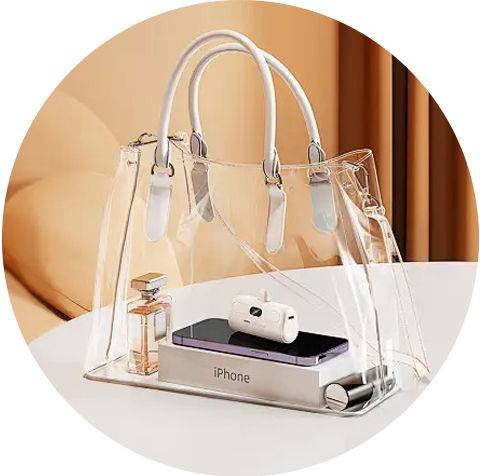
EVA, TPU and PVC are useful for clear pouches, structured cases and easy-clean designs.
They can resist spills better than uncoated fabric. TPU often has a softer appearance, while PVC may be selected for transparency and cost control.
These materials can feel stiffer than fabric. Recycling expectations and market regulations should be reviewed before production.
Match the Material with Construction and Branding Details
The outer fabric is only one part of the makeup bag.
Polyester may be paired with a wipe-clean lining. Canvas may need seam reinforcement. PU may require a zipper that matches its premium appearance.
Logo methods should match the surface. Screen printing works well on many flat fabrics. Embroidery adds texture but may not suit thin materials. Debossing can complement PU. Woven labels help preserve fine logo details.
Zippers, pullers, handles and hooks should match the material’s weight. A lightweight pouch with oversized hardware can feel unbalanced.
A Simple Material Selection Guide
Use this guide as a practical starting point:
| Product requirement | Recommended direction |
| Affordable bulk promotional bag | Polyester |
| Frequent travel and abrasion resistance | Nylon |
| Natural or lifestyle branding | Cotton or canvas |
| Premium leather-look appearance | PU |
| Sustainability-focused collection | Recycled polyester |
| Structured or easy-clean case | EVA, TPU or PVC |
A material combination may work better than one fabric alone. Coated polyester, lined canvas and reinforced PU can each solve a specific product need.
Turn Your Material Choice into a Production-Ready Specification
A useful quote request should include the bag dimensions, target quantity and preferred material. Add fabric thickness, color reference and lining requirements.
Logo artwork, zipper type, hardware finish and packaging should also be stated. The target retail position or cost is helpful when material recommendations are needed.
A pre-production sample allows the buyer to check hand feel, structure, color and logo clarity. Small problems are easier to correct before bulk production.
Why Choose Chic for Custom Cosmetic Bags?
Chic serves B2B buyers seeking custom bags and related accessories. Its range includes cosmetic bags, tote bags, crossbody bags, waist bags, wallets, keychains and other bag accessories.
This broader range helps brands build a coordinated collection. A cosmetic pouch can share colors and hardware with a tote or wallet. A keychain can extend the same visual theme.
Buyers can provide the intended use, target market, quantity and design direction. Chic can then help move the discussion from a general idea to a workable product specification.
Conclusion
The right material balances performance, appearance, cost and brand position. Polyester may suit one project. Nylon, canvas, PU or a technical material may suit another.
Not sure which material is right for your cosmetic bag project?
Contact Chic with your target quantity, design idea and preferred market position. Our team can help you compare suitable materials and develop a custom sample for your brand.
FAQ
Q: What is the best material for custom cosmetic bags?
There is no single best option. Polyester suits cost-sensitive projects. Nylon works well for travel. Canvas, PU and technical materials serve more specific needs.
Q: Is nylon better than polyester for cosmetic bags?
Nylon often feels softer and handles abrasion well. Polyester is usually more economical and offers broad customization options.
Q: Are recycled materials suitable for wholesale cosmetic bags?
Yes. Recycled polyester can provide practical performance. Recycled content and documentation should be confirmed before publishing environmental claims.
Q: Can Chic create matching bags and accessories?
Chic’s range covers cosmetic bags, totes, wallets, keychains and other bag accessories. Buyers can discuss coordinated designs across several categories.

 consult
 WHATSAPP
 leave message
 top
top