


Types of Makeup Bags: 7 Styles for Beauty Brands & Retailers
Why Are Makeup Bags Important for Cosmetic Brands?
A makeup bag does a double job for a beauty brand. It carries the products, and it keeps the brand in a customer’s drawer, gym bag, or carry-on. Which job matters most depends on the line. The types of makeup bags below are where that call gets made: flat pouch, train case, hanging case — each one suits a different customer, and the seven covered here are the styles that show up most in retail collections.
What Should Brands Consider When Choosing Makeup Bag Types?
Who is actually going to carry the bag? A desk customer? A traveling one? Lipsticks and compacts, or full bottles and palettes — what lands inside decides the shape. Shelf, hook, or carry-on: where it lives decides the structure. And price — entry add-on or premium gift — decides how much of the build budget you can spend. A brush-heavy kit needs a different bag than a lipstick pouch, and the custom cosmetic bag range shows how the styles differ in build.
7 Popular Types of Makeup Bags for Cosmetic Brands and Retail Collections
These seven cover most retail needs, from a simple entry product to a pro-level case.
1. Flat Makeup Pouches
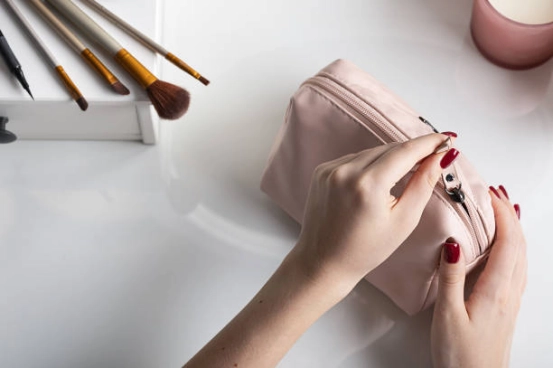
One shell, a top zipper, and little depth. That is the whole design. Lipsticks, compacts, cotton pads, pencils — the small stuff that piles up on a vanity goes in here. Simple to make, light to carry, flat to pack. Promo sets, giveaways, entry retail: a flat pouch is where most of those lines start.
2. Box Makeup Bags (Gusseted Makeup Bags)
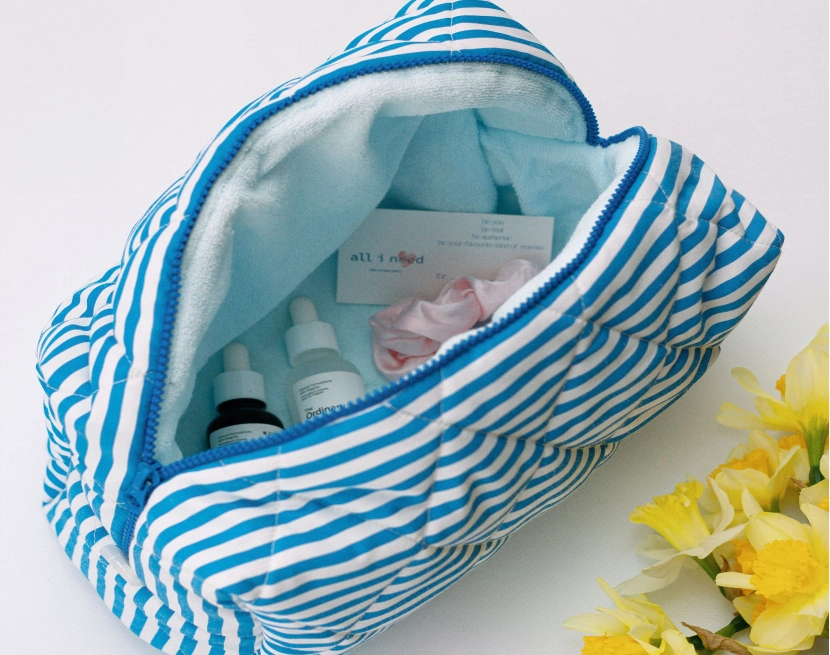
What does a gusset add? A base and side walls. The bag stands upright on a shelf. Full-size foundation, a few skincare bottles, a small palette — they fit, and they stay put instead of rolling around. Everyday storage and mid-tier retail sets are the natural fit. More fabric than a flat pouch, and it packs less flat — a trade-off worth knowing before you order.
3. Makeup Train Cases
Most structured style on the list. Rigid or semi-rigid body, usually with a handle. Trays, dividers, several levels of storage. The heavy kit lives here: liquid foundations, brush sets, palettes, tools. Makeup artists recognize the shape. It reads premium. Build and shipping run higher than a soft pouch, so the train case usually anchors the high end of a lineup.
4. Hanging Makeup Bags
One hook, and the bag stops fighting for counter space. Bathroom door. Hotel rack. Wardrobe rail — flat surfaces stay free. Zippered pockets and dividers give bottles and tools a fixed spot. Travel kits, toiletry sets, practical retail products are the home for it. The hook takes the real stress in use — specify the hardware before the fabric.
5. Makeup Brush Rolls and Brush Cases
Loose brushes? Bristles end up on lids and palettes — that is the daily problem a roll solves. Each brush gets a slot or elastic loop, and the set unrolls to show everything at once. Designs run from an elastic-banded sleeve to a rigid case with individual pockets. Professional artists, brush brands, brush-set bundles buy these. Slot spacing should match the brush sizes actually sold — a 17 cm brush does not fit a slot cut for 12 cm.
6. Clear Makeup Bags
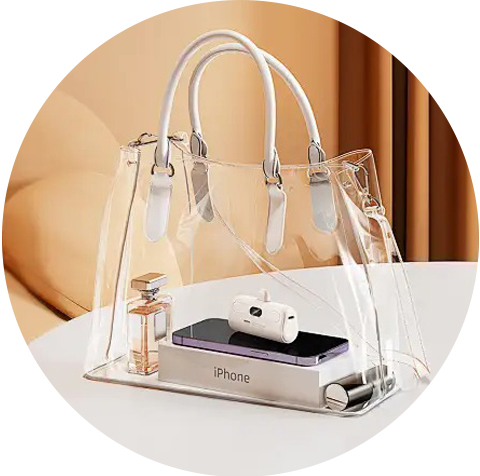
See-through, so the owner checks contents at a glance. Clear PVC bags, two-tone panels with a window — the common forms. They wipe down easily. The look works in retail where product visibility sells. Film stiffness, the zipper, and how the clear panel meets the fabric decide how the bag stands and feels.
7. Multi-Compartment Makeup Organizer Bags
This one is about the inside. Zippered pockets, mesh windows, elastic loops, dividers — each product gets a fixed position. The person carrying a lot of product wins: nothing shifts, nothing hides. Build the layout from a real product list — bottle count, brush count, which items need protection. Mid-to-premium brands, organization lines, travel sets.
Which styles make the cut for an assortment? The flat pouch covers the basics, the train case takes a full kit, the hanging bag saves space, the organizer sorts a large collection. Choose by market and channel — a complicated design is not a reason on its own.
How to Build a Balanced Makeup Bag Collection for Retail?
A balanced lineup covers price points and use cases without the styles overlapping — a real concern when private label makeup bags share a shelf with established products.
Entry-Level Products
Flat pouches lead here. Simple design, low cost, easy to carry. Entry retail, promo giveaways, add-on sales at checkout — a flat pouch next to a palette sells itself.
Everyday Retail Products
Gusseted boxes and multi-compartment organizers fill the middle. Daily storage is the job, and they give customers a reason to pay more than the entry price.
Premium and Specialty Products
Train cases and hanging bags sit at the top. Structure, interior layout, and hardware are where the differentiation — and the margin — happens.
What Materials and Customization Options Are Available for Makeup Bags?
Choosing the Right Materials
Refined, fashion-led look? PU leather. Light and abrasion-resistant for travel? Nylon. Casual and natural? Canvas. Clear or see-through panels? PVC. Structural body? Oxford fabric. Structure and size are linked — a thick padded shell changes the fit — so review the material options for custom cosmetic bags before the pattern is cut.
Customization Options for Beauty Brands
Size and shape to order. Interior built around the product list. Logo by screen print, heat transfer, or embroidery. Color matched to a brand reference. Labels, hangtags, boxes to finish the presentation. The customization options cover all of it.
What Should Wholesale Buyers Check Before Ordering Custom Makeup Bags?
Four checks catch most problems before a bulk order starts.
1. Product Dimensions and Capacity
Does the bag hold the intended items? Long brushes, tall bottles, wide palettes are the usual surprises. Run a loaded test — paper measurements miss them.
2. Material and Construction Quality
Fabric, lining, zippers, stitching — look at all four. Do the interior pockets sit firm? Does the shape hold when full?
3. Logo and Color Consistency
Logo position, print quality, shade — check all three against the approved sample, then confirm the bulk units match. Small shifts show up fast when the spec is loose.
4. Sample Testing
Load the sample with the real assortment. Test opening, closure, seams, repacking. Sample development support settles those points before production.
Develop Your Custom Makeup Bag Collection with Chic
Chic works with overseas brands, wholesalers, and importers on OEM and ODM projects — styles, materials, colors, logos, and packaging are open to discussion. Product photo, design sketch, or reference sample: send any of the three, and the collection plan follows the target market.
Looking for a reliable custom makeup bag manufacturer? Contact Chic to explore styles, materials, and branding options for the next collection.
Frequently Asked Questions About Different Types of Makeup Bags
Three questions come up a lot when brands start comparing styles.
What is the most popular type of makeup bag?
Flat pouches, gusseted boxes, and organizer bags move the most volume in retail. Which wins depends on the market and use case. Match the style to the customer — the average is not the answer.
What type of makeup bag is best for travel?
Hanging bags and travel-style cosmetic bags. They save flat space, close securely, keep bottles away from powders. Check the opening against the largest item inside.
Can cosmetic brands customize the shape and material of makeup bags?
Yes. OEM and ODM manufacturers work to brand specs — shape, material, size, logo, interior layout. A clear brief and a reference sample keep development moving.

 consult
 WHATSAPP
 leave message
 top