


Waterproof Bags vs Water-Resistant Bags for Wholesale Buyers
Introduction – Understanding Waterproof and Water Resistant Bags
A cosmetic pouch beside a wet sink and a tote caught in a downpour face different problems. Yet both might arrive in a buying brief labelled “waterproof.” That word leaves quite a bit for a supplier to guess. Getting waterproof bags when water resistant bags would do adds cost; getting the reverse leaves you dealing with wet belongings and returns.
Waterproof vs Water Resistant Bags – What’s the Difference?
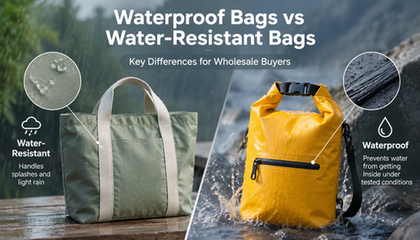
Water resistant bags are for limited contact with water. You spill a drink, wipe it off, and carry on; light rain is another typical use. The longer water stays against the bag, the more demanding the job becomes.
Waterproof bags need an agreed boundary around that job. For the stated exposure time and conditions, water must not get inside the closed bag.
|
Comparison |
Water Resistant Bags |
Waterproof Bags |
|---|---|---|
|
Exposure |
Splashes or light rain |
The conditions specified in testing |
|
Construction |
Often coated cloth with sewn seams |
Seams and closure must also block entry |
|
Budget |
Usually the cheaper option |
Extra sealing can raise the unit price |
An impermeable fabric with a leaking zip still gives you a leaking bag. And “waterproof” without a defined immersion test is no invitation to take it underwater.
Water Repellent vs Water Resistant vs Waterproof
A droplet sitting on nylon like a small bead is a clue to the finish. That’s the surface effect behind water repellent bags, often achieved with DWR treatment. A PU coating adds resistance to water penetration. Stitch either material into a pouch, though, and the zip and needle holes still need attention before “waterproof” belongs on a hangtag.
Best Materials for Waterproof and Water Resistant Bags
When comparing waterproof bag materials, get swatches with the coating and thickness identified. Two pieces of “nylon” may behave quite differently.
PU Coated Polyester
For a run of promotional tote bags, PU coated polyester gives you a relatively light, affordable starting point. The coating does the work against water, so its specification matters more than a “polyester” label on the quotation.
Nylon and Oxford Fabric
Nylon names a fibre; Oxford describes a fabric construction. Neither guarantees water protection. For a waist bag, add abrasion checks to the material review: that fabric will rub against clothing whenever the wearer walks.
PVC Coated Fabrics
For toiletries, being able to wipe away a spill is part of PVC’s appeal. There is a distinction to settle when ordering: PVC coated cloth and transparent PVC film aren’t the same material.
TPU Laminated Fabrics
TPU lamination puts a barrier film onto a supporting fabric. In a folded sports bag, that bond matters. For a transparent design, compare PVC and TPU samples by hand before settling the feel you want.
What Makes a Bag Truly Waterproof? Materials vs Construction
Seam Sealing and Stitching
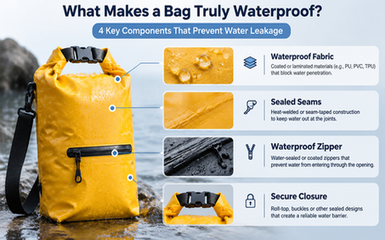
Pull back a reinforcement patch if the sample construction allows it. Does the seam tape reach underneath, or stop short? Needle holes don’t disappear because another layer covers them. Welding compatible materials avoids sewing that join; suitable tape covers stitched ones.
Zippers and Closures
Trace the zip all the way to the end. The last few millimetres can leave a gap even with protected teeth. Rain may run off a flap above it, but that flap isn’t a seal. A roll top needs its closing instructions checked alongside the sample.
Lining and Structural Design
Two compartments can share a stitched join at the bottom. That’s where to look after putting a wet washcloth in one side. If the other side becomes damp along that line, upgrading the flat lining fabric alone may solve very little.
Which Type of Bag Needs Waterproof or Water Resistant Protection?
For cosmetic bags, take the lid off the problem, literally: imagine a loose cap on a toner bottle. Water resistance won’t make the lining easy to clean by itself. Everyday totes need rain resistance; crossbody and waist bags carrying electronics outdoors deserve closer attention at the closure.
A toiletry bag lying sideways in a suitcase has a different problem again. Check whether leaked shampoo stays inside it, then test water coming from outside as a separate exercise. Coating the base of an open beach tote won’t keep rain off a phone inside.
How Wholesale Buyers Can Test Waterproof Bag Quality
Don’t separate the sample from its test notes. You’ll want both when the production shipment arrives.
Fabric Testing
A hydrostatic pressure report concerns the fabric submitted for testing. Check the sample description before filing it: a result for another coating isn’t much help with this order. You still need evidence for the assembled bag, plus a repellency check if the surface finish matters.
Finished Bag Testing
Was water dripped from above, sprayed sideways, or applied under pressure? For how long? The record needs those details and the method used, together with the amount of water entry allowed. Leave those blank and “passed” means little. Pack and close the bag for the test. Mark any damp spots near zip ends, corners or seams; dry paper inside can help during a screening check. Test internal spills separately.
Bulk Production Quality Control
Set aside a signed sample that nobody borrows for sales visits. Compare batch materials, zippers, stitching and seam sealing against it when goods arrive. Repeat the agreed water test on sampled production units. A different coating can hide behind the same colour and fabric name.
How to Choose the Right Waterproof Level for Wholesale Orders
A brief that says “poolside” is still unfinished. Carrying wet towels home is one job; keeping a phone dry beside the water is another. Spell out which you need in the enquiry. Then attach the exposure conditions and the pass/fail limits to the quote request.
Price the resulting construction and confirm colours, logo application, lining and zippers on the final sample. Read the proposed hangtag as a customer would. Could its wording encourage someone to swim with a bag only checked for rain?
Why Choose Chic for Custom Waterproof Bags?
Your OEM or ODM brief gives Chic’s Yiwu team the details to work from: bag dimensions, artwork, colours and packaging. Material choices include PU leather, nylon, PVC and canvas for cosmetic, tote, crossbody and waist bags. Leave room for construction changes when developing custom waterproof bags. The sample has to meet the exposure requirement before the wording goes on the label.
Order against a tested specification. Contact Chic with the intended use, exposure requirements and quantity to discuss materials and a wholesale bag design.
FAQs About Waterproof and Water Resistant Bags
Q1: Are waterproof bags better than water resistant bags?
Where will it go? A pouch tucked inside a handbag has little reason to carry the cost of a construction meant for prolonged wet exposure.
Q2: What is the best material for waterproof bags?
Try TPU laminates, PVC or coated nylon alongside your closure drawing. Choosing the cloth first and sorting out a leaking opening later can mean another sample round.
Q3: Can a water resistant bag become fully waterproof?
It may take a rebuild. Spraying the outside leaves the zipper gaps untouched. Check the revised seams, coating and closure together in testing.

 consult
 WHATSAPP
 leave message
 top